Abstract
We have been experimentally asking if there is a molecular logic that sustains neuronal survival as the brain is confronted with the onset and/or progression of neurodegenerations. We found that at the onset of homeostasis disturbance, the brain activates the production of mediators of cell integrity, particularly targeting synaptic deconstruction, the elovanoids (ELVs). They are formed from very long-chain polyunsaturated fatty acids (C 32-34) synthesized by neuronal-specific ELOVL4. Mutations of the gene that encodes this enzyme cause, among other pathologies, seizures, mental retardation, and vision loss. ELVs protect neurons by upregulating pro-survival and downregulating pro-apoptotic protein abundance. Also, ELVs enhance deacetylase Sirtuin 1, which modulates longevity signaling; E3 ubiquitin ligase (Iduna), and transcriptional regulator Prohibitin type 2. The ELV synthesis pathways are downregulated in Alzheimer’s models and in specific retinal cells of age-related macular degeneration patients. Using limited proteolysis/MS, we found that ELV-N34 selectively modulates TNXRD1 (from thioredoxin, an NADPH/FAD redox-effector that sustains homeostasis), underling its protection. Overall, ELVs are resiliency epigenetic regulators of telomere integrity that modulate DNA methylation: histone function and pathological specific forms of Tau. Moreover, ELVs induce neuronal cell survival; counteract oligomeric Aβ peptide-induced cell damage; are neuroprotective after ischemic stroke and TBI; modulate transcriptome architecture and dendrite integrity; and downregulate senescence gene programming, autophagy, extracellular matrix remodeling, and inflammaging. It is of interest that these signaling events converge in synapse protection.
Biography
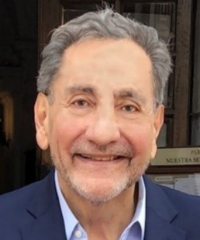
Nicolas G. Bazan, MD, PhD, is the inaugural founder of the Ernest C. and Yvette C. Villere Chair for Research in Retinal Degeneration, the founding Director of the Neuroscience Center of Excellence at LSU Health New Orleans, and has been appointed to the highest academic rank in the LSU System—Boyd Professor. He previously served as a Foreign Adjunct Professor of Neuroscience at the Karolinska Institutet (2017–2023) and is the former Editor-in-Chief (1987-2020) of Molecular Neurobiology (Springer). “A true Renaissance man,” Dr. Bazan is an innovative research scientist, effective mentor, generous community leader, creative author, executive movie producer, arts patron, entrepreneur, and transformative influencer in implementing a knowledge-based local economy. His pioneering research has opened conceptual inroads in neuroscience, ophthalmology, and medicine by uncovering signaling mechanisms and novel molecular principles of aging, cell survival, and neuroprotection as part of his ongoing quest to respond to one major challenge to civilization: the growing incidence of the loss of sight and cognition. He has served in leadership roles, including on multiple advisory committees for NIH study sections. Additionally, he is a Founding Senate Member of the German Center for Neurodegenerative Diseases (DZNE)—a nationwide research program on Alzheimer’s disease in Germany—and Chairman Emeritus of the Board of Governors for the ARVO Foundation. He is also the author of Una Vida: A Fable of Music and the Mind (2012), The Dark Madonna: A Fable of Resiliency and Imagination (2013), and Brain Aging and Resilience: Exploring the Adaptability of the Human Brain in the Face of Aging and Adverse Conditions (2025).