The advent of artificial intelligence (AI) has irrevocably transformed the landscape of architectural education
and practice. However, its current application within design studios often privileges the generation of visually
compelling fantasies over the cultivation of rigorous, process-driven design thinking. This tendency risks
overshadowing the development of synthetic, contextually responsive solutions to the complex challenges
facing architecture today. A prevailing concern among educators is the potential for AI to suppress human
creativity and erode the intangible, humanistic dimensions that are central to architectural education. In
response, some institutions have resorted to prohibiting AI tools altogether, seeking to safeguard the
discipline’s humanistic core.
This presentation advocates for a more nuanced pedagogical integration of AI—one that emphasizes
personalisation and human agency within the creative process. The argument is made that the limitations of
current AI applications in architectural education stem from a lack of robust knowledge-expert infrastructures.
By embedding knowledge engineering into iterative, progressive learning processes, AI can be harnessed to
augment, rather than replace, the designer’s capacity for innovation and critical decision-making. This
approach shifts the focus from superficial formal or semiotic exploration to the cultivation of deep design
intelligence, grounded in scientific reasoning and contextual awareness.
Drawing on a series of M.Arch design studio projects, this presentation will demonstrate methodologies for
leveraging AI as a knowledge-based stimulus that enhances human heuristic processes—such as diagnosing,
reasoning, learning, and self-correction—within collaborative human-computational workflows. Rather than
merely expanding the repertoire of formal and spatial possibilities, the proposed framework challenges
students to address fundamental design innovation through the lens of social, economic, material, and
statutory constraints, moving beyond isolated concerns such as ecological efficiency. Furthermore, the
research explores the development of intelligent digital architectural prototypes, envisioning a paradigm shift
from bespoke, labor-intensive design solutions towards adaptable, mass-customised products enabled by
computational intelligence.
Ultimately, this work seeks to reframe the discourse on AI in architectural education, proposing a path forward
that reconciles technological advancement with the preservation of humanistic and disciplinary values.
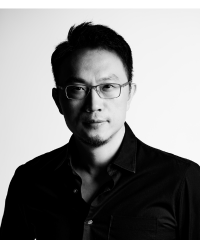
Reframing AI in Architectural Education: From Visual Fascination to Knowledge-Based Design Innovation
Yan Gao
Speakers
Day 1