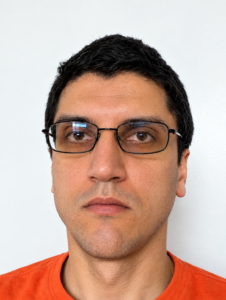
Muhammad Aslam completed his doctoral degree (without Corrections) in Structural
Engineering & Materials from the University of Malaya in 2017. He obtained his BSc in Civil
Engineering (2012) from the Mehran University of Engineering & Technology, Jamshoro,
Pakistan. He is professionally recognised as a “REGISTERED ENGINEER,” a lifetime member
of the Pakistan Engineering Council (PEC), and a Chartered Member of the Chartered
Association of Building Engineers (CABE), UK. Recently, in July 2024, he joined as an
Assistant Professor in the College of Architecture and Energy Engineering, Wenzhou University
of Technology, Zhejiang, China. Previously, since November 2017, he served as an Assistant
Professor in the Department of Civil Engineering, School of Engineering and Technology,
Institute of Southern Punjab (ISP), Multan, and later, in May 2023, was promoted to Associate
Professor and served up to July, 2024. During his bachelor’s degree, he found that Concrete and
Structures were his main interest; therefore, his main focus was on the Research & Development
in Concrete Materials & Structures. During and after his PhD degree, he published several
research articles in high-impact factor journals in the field of Concrete Technology using
different waste by-products. In addition, he has vast teaching experience at BSc, MSc and PhD
levels, including Concrete Technology, Properties of Structural Materials, Design of Structures,
Theory of Structures, Prestressed Concrete Structures, Reinforced Concrete Structures, Steel
Structures, and Seismic Design of Structures. Currently, he is working as a Key Research
Member in the “Zhejiang-Malaysia Joint Laboratory on Marine Low-carbon (Green) Building
Materials. His major research fields include structural concrete using waste materials for
conventional and marine structures, upgradation of reinforced concrete and timber structures,
and sustainable construction materials using waste by-products.
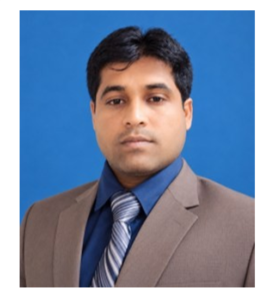 China
Muhammad Aslam
Wenzhou University of Technology
Committee Member