Abstract
Optical bioimaging, based on luminescent probes, is widely used as a highly sensitive, non-invasive method across various biological scales: from the labeling and identification of individual biomolecules and cellular compartments to the visualization of metabolic processes in living organisms. The pH of the microenvironment is one of the most important physiological parameters determining the direction and pathway of metabolic reactions. For example, the synthesis and degradation of biomolecules, as well as the directed movement of biological components within the cell, occur only at specific pH values; any deviation from the normal range for corresponding compartments indicates dysfunction.
For mapping and monitoring intracellular pH, the most promising approaches are time-resolved optical sensing techniques based on changes in the excited-state lifetime, as the measurement results are independent of the optical properties of the medium and the sensor concentration. Among fluorescence lifetime-based sensors, green fluorescent proteins and fluorescein derivatives are the most extensively investigated candidates. However, their major limitation is a low average lifetime sensitivity to pH changes (typically a few tenths of a nanosecond per pH unit).
In the study, we developed water-soluble graphene quantum dots (gQDs) using a one-step hydrothermal method. These gQDs bear primary amino groups on their edges, which provide pH sensitivity in both fluorescence intensity and lifetime. Photophysical experiments demonstrated that the gQDs exhibit a lifetime pH sensitivity of approximately 1 ns per pH unit. Biological investigations demonstrated the uniform distribution of non-functionalized gQDs within the intracellular space, as well as the targeted internalization of vectorized gQD compounds.
Biography
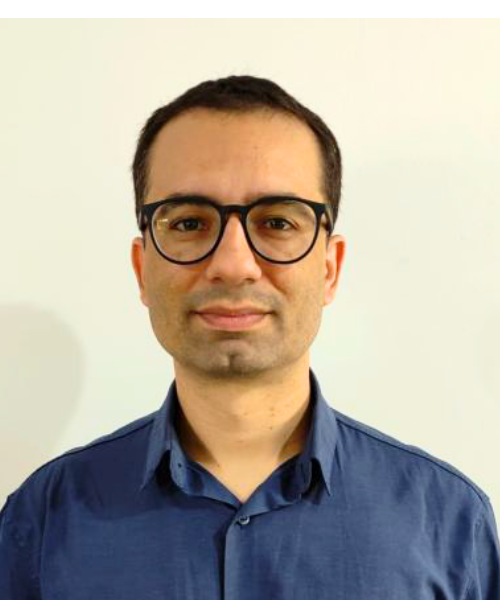
Vadim Baigildin has completed his PhD at the age of 26 years from St. Petersburg Institute of Technology and postdoctoral studies from St.Petersburg State University. He is now Associate Professor and Senior Scientist of St.Petersburg State University. He has published more than 30 papers in high-impacted journals.