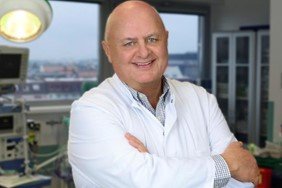
Dr. Ugo Rovigatti obtained his Ph.D. degree in Molecular Biology with Summa cum Laude in
1973 and in 1999 the Tenured Professorship. From 1979 to 1999 he worked with renown
Scientists such as C. Basilico, R. Weiss, H. Varmus, S. Astrin, T. Papas, D. Watson, P. Duesberg, JJ
Yunis, J. Bader, J. Trentin, B. Hirt at: ICRF in London, UK; the Rockefeller University in New York;
the Fox Chase Institute in Philadelphia; St. Jude Children’s Hospital in Memphis, TN; the NCI in
Frederick, MD; the Ochsner Foundation-Clinic in New Orleans, LA; the Baylor College of
Medicine in Houston, TX. Between 1997 and 1999 he was a sabbatical professor in Switzerland
(KISPI in Zurich and ISREC in Lausanne). His research work as PI has been funded by grants from
UICC, ICRETT, SCL, MIUR, MURST etc.
Research Interests
His interests in cancer research progressed from work on oncogenic viruses –studies on SV-40
and on RSV- to oncogenes/TSGs –studies on cMYC, NMYC and ETS-, Immunoglobulin
Rearrangements (childhood cALL, AML and T-ALL) and pediatric neuroblastoma. Starting from
neuroblastoma studies, he has developed a model (based on the Micro-Foci inducing Virus,
MFV) for the origin of specific genetic aberrations, which is being tested with NGS technology.
This model was eventually extended from paediatric neuroblastoma to paediatric lymphoma,
from which similar viruses were isolated (MFRVs), and prostate carcinoma, where extensive
genomic heterogeneity (chromoplexy) is present. In the past few years, he has elaborated a
general analysis of cancer modeling, thus clarifying new upstream mechanisms (GenomeSnipers) and explicatory pathways. Very recently, he has provided a clearer explanation of the
anti-GD2 therapeutic and curative effects (20% OS/PFS improvement, particularly when N-Myc
is amplified) in High-Risk Neuroblastoma, as this ganglioside also behaves as a receptor
(docking-point) for the virus MFV.
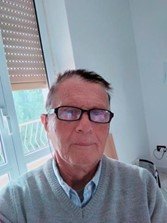 Italy
Italy
Ugo Rovigatti
UNIVERSITY OF FLORENCE
Committee Member