ABSTRACT :
Objectives: While ultrasound (US) facilitates accurate grading of insertional Achilles tendinopathy (IAT), validated systems are scarce. We aimed to establish deep learning (DL) algorithms to help optimize decision-making.
Methods: Patients from three clinical centers were retrospectively allocated (n= 645), and assigned to the training, validation, and internal test sets at a ratio of 8:1:1. US-based DL algorithms were established to grade IAT (mild, moderate, or severe) utilizing tendon thickness, echogenicity, and intratendinous vascularity. Six radiologists at varying expertise were compared against the model in the internal test set. A prospective, randomized, crossover trial was conducted using an external test set sourced from two additional centers. Grad-CAMs and Shapley values were employed for interpretability analyzes. MRI results were considered as the reference standard.
Results: We selected the ViLT as the final backbone (IATGrader) after comparing nine architectural networks, with areas under the curve (AUCs) of 0.978 and 0.966 in the test sets. IATGrader outperformed the average performance of the six radiologists (accuracy: 0.926 vs. 0.784, p < .05). The diagnostic accuracy of six radiologists was significantly enhanced with its assistance (0.816 vs. 0.857, p< .05). The inter-radiologist consistency was also enhanced. Tendon thickness consistently played the most significant role in the prediction process, and the heatmaps indicated a trend that matched the attention patterns of human radiologists.
Biography :
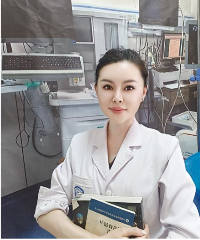
Dr. Xiaochen Shi received her Ph.D degree in Ultrasound Medicine from Peking University People’s Hospital after completing a three-year doctoral program. During her doctoral training, she focused on integrated use of ultrasound for the diagnosis and treatment of musculoskeletal (MSK) diseases. Her research has centered on developing novel techniques to improve the diagnosis accuracy of peripheral nerve entrapment syndromes, including meralgia paresthetica (MP) and carpal tunnel syndrome (CTS). Moreover, to support a stepwise treatment strategy for MSK diseases, she focused on investigating ultrasound-guided mini-invasive treatment strategies for MSK diseases, aiming to reduce the need for open surgery in appropriate patients. To further improve the diagnosis accuracy and prognostic prediction of MSK diseases, she subsequently pursed postdoctoral research in the Department of Orthopedic Trauma at Peking University People’s Hospital, focusing cooperation with artificial intelligence (AI) laboratories. The overall goal of her research is to integrate commonly available sonographic features and clinical parameters to develop US-based AI systems that can provide reliable evidence to support clinical decision-making in MSK disorders, including anterior talofibular ligament (ATFL), CTS, Achilles tendon (AT), meanwhile fully leveraging the inherent advantages of ultrasound. She was supported by China Medical Foundation to accomplish these studies. She served as the vice chair of the Youth Committee of the Musculoskeletal Ultrasound Branch of the Chinese Society of Ultrasound in Medicine and Engineering. She was also a recipient of the Beijing Association for Science and Technology Young Talent Support Program. Dr. Shi has published several research articles in pain management field, including Academic Radiology, European Journal of Radiology, Pain Physician, and others.