Plant diversity is essential for regulating ecosystem functions, yet its global-scale relationship with soil respiration (Rs), the largest carbon fluxes from soil to the atmosphere, remains unexplored. While plant productivity modulates ecosystem processes, understanding how plant species richness regulates Rs across net primary production (NPP) gradients is key to predicting carbon-climate feedbacks. First, we modeled global Rs using a deep learning model – Multi-Layer Perceptron (MLP) based on 6,355 field observations. The MLP model could well capture the spatial variability of Rs with model efficiencies of 0.74 and 0.65 for Leave-One-Year-Out and Leave-One-Site-Out cross-validations. Globally, Rs was estimated of 79.4±5.7 PgC year−1 with an increasing trend of 0.152 Pg C yr-2 (p < 0.001) from 1982 to 2018. Second, we integrated two global plant species richness datasets (tree species richness and vascular plant richness, including all woody plants) to evaluated the effects of plant biodiversity on Rs. We found that plant diversity enhances Rs in low- to mid-productivity forests (< 1,300 g C m−2 yr−1), but this effect diminishes in high-productivity forests. By stratifying forests along an vegetation net primary production (NPP) gradient and controlling for climatic, soil, and vegetation covariates via structural equation modeling, we reveal a context-dependent role of biodiversity: greater plant species richness amplifies Rs in resource-limited systems but contributes minimally in high-productivity forests, where abiotic factors exert stronger control. Our findings provide new insights into how biodiversity influences soil carbon fluxes, revealing its dynamic role in shaping ecosystem carbon dynamics across productivity gradients. Acknowledgement: This work was funded by the National Natural Science Foundation of China (32271856) and the Everest Scientific Research Program of Chengdu University of Technology (80000-2023ZF11410).
Biography:
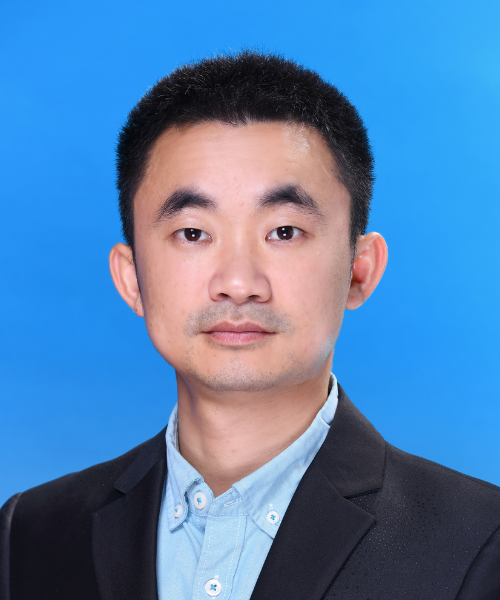
Dr. Xiaolu Tang is a Professor at the Chengdu University of Technology, China. He received his PhD from University of Göttingen in 2015 and worked as a postdoctoral researcher at the Max Planck Institute for Biogeochemistry from 2016 to 2017. His research focuses on soil carbon cycling in terrestrial ecosystems using field observations and data-driven approaches. Dr. Tang has authored more than 60 publications in leading journals, including Nature Communications, Global Change Biology, and Global Biogeochemical Cycles.