The central questions addressed by the relatively new science of astrobiology: the chemical and physical conditions required for life (possibly, but not necessarily, similar to life as we know it), and what makes a planet habitable, may be explored by studying Earth and its climate, and their implications to the possibility of life elsewhere. In a new book (“Life in Space” Wandel and Gale, Springer 2025) we show how the particular properties of Planet Earth and its cosmic environment, the combination of Earth’s unique place relative to the Sun, its orbit within the Habitable or Goldilocks Zone, its geology, atmosphere and Magnetosphere, ensured the mild and stable climate that enabled the evolution and prolonged existence of life. As in the book, we relate these features to Earth’s climate present situation and human influence. Humanity is accelerating climate change today through rising greenhouse gas emissions, deforestation, and fossil fuel usage. Apparently, these activities are already contributing to desertification, more frequent and intense floods and landslides, stronger storms, wildfires, and sea-level rise affecting coastal regions. Beyond the massive loss of biodiversity, climate change disrupts ecological systems that human societies depend on for food, water, and stability. Current projections suggest that potentially over 100 million people could be displaced by 2050 due to climate-related impacts such as heat stress, water scarcity, and sea-level rise. The issue is not about “saving the planet” — Earth will persist. It is about preventing large-scale humanitarian crisis, the early signs of which are already visible today.
Biography
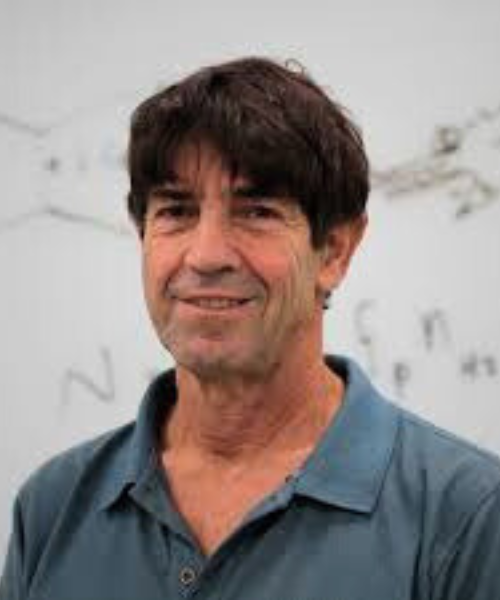
Prof. Amri Wandel is an Astrophysicist at the Hebrew University of Jerusalem. In addition to his influential theoretical work on active galactic nuclei and supermassive black holes, he has focused on planetary habitability, the Habitable Zone, exoplanets and the detectability of life. He has developed and taught university courses in astrobiology and coauthored the book “Life in Space” (https://link.springer.com/book/10.1007/978-3-031-64639-3) on the scientific search for life in the universe, contributing to both research and academic curriculum development in the field. Held visiting research and teaching positions at the University of California, Los Angeles, and is the president of The Israel Society for Astrobiology and the Study of the Origin of Life (ILASOL).